Tích hợp nghiên cứu thuộc tính địa chấn với các nghiên cứu môi trường trầm tích, địa vật lý giếng khoan nhằm dự báo sự phấn bố và tính chất vỉa chứa địa tầng Oligocene, lô 09-2/10, bể Cửu Long
Tóm tắt
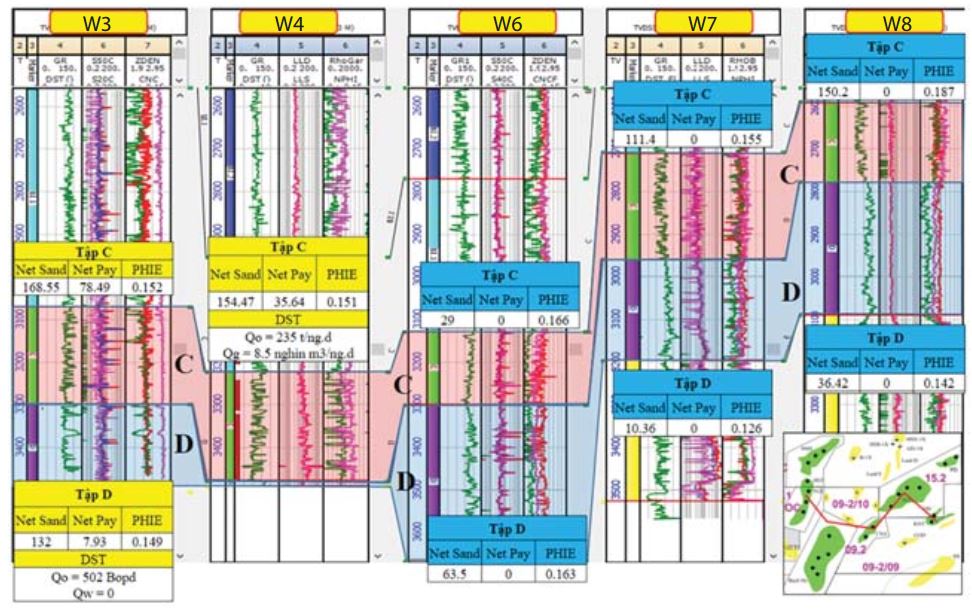
Ngoài bẫy chứa dầu khí truyền thống dạng cấu trúc, các bẫy chứa dầu khí dạng địa tầng - thạch học là đối tượng nghiên cứu mới đóng vai trò quan trọng ở thềm lục địa Việt Nam. Để dự báo sự phân bố và tính chất của các thân cát chứa dầu khí dạng bẫy địa tầng nói chung và bẫy địa tầng tuổi Oligocene ở Lô 09-2/10 bể Cửu Long nói riêng, có thể sử dụng phương pháp phân tích thuộc tính địa chấn kết hợp với các phương pháp nghiên cứu tổng hợp tài liệu địa chất - địa vật lý (kiến tạo, cổ địa lý, cổ môi trường, thạch học, cổ sinh...). Bài báo đề cập đến việc sử dụng tổ hợp các phương pháp phân tích thuộc tính địa chấn như thuộc tính biên độ (biên độ âm cực đại, biên độ trung bình, biến đổi biên độ theo khoảng cách), thuộc tính tần số (phổ tần số, tần số chủ đạo) kết hợp với phương pháp phân tích tướng và môi trường trầm tích dọc theo các giếng khoan dựa trên các tài liệu cổ sinh, địa vật lý giếng khoan, mô tả mẫu lõi nhằm làm sáng tỏ đặc điểm phân bố và tính chất vỉa chứa địa tầng của đối tượng Oligocene khu vực bẫy địa tầng LG, Lô 09-2/10 bể Cửu Long.
Các tài liệu tham khảo
2. CGG Veritas. Block 09-2/10 seismic data reprocessing report. 2011.
3. PVEP-ITC. Seismic attribute study for LG stratigraphic trend in Block 09-2/10, Cuu Long basin. 2016.
4. Satinder Chopra, Kurt J.Marfurt. Seismic attributes for prospect identifcation and reservoir characterization. 2009.
5. Robb Simm, Mike Bacon. Seismic Amplitude: An Interpreter's Handbook. 2014.
6. Bryn E.Clark, Ron J.Steel. Eocene turbiditepopulation statistics from shelf edge to basin floor, spitsbergen, svalbard. Journal of Sedimentary Research. 2006; 76: p. 903 - 918.
7. Vietsopetro. Tổng hợp và phân tích tài liệu địa chất địa vật lý đối với các trầm tích khu vực phía Bắc và Đông Bắc mỏ Bạch Hổ để xác định các bẫy phi cấu tạo. 2014.
8. Schlumberger et al. Seismic attributes book. 2015.
1. Tác giả giao bản quyền bài viết (tác phẩm) cho Tạp chí Dầu khí, bao gồm quyền xuất bản, tái bản, bán và phân phối toàn bộ hoặc một phần tác phẩm trong các ấn bản điện tử và in của Tạp chí Dầu khí.
2. Bằng cách chuyển nhượng bản quyền này cho Tạp chí Dầu khí, việc sao chép, đăng hoặc sử dụng một phần hay toàn bộ tác phẩm nào của Tạp chí Dầu khí trên bất kỳ phương tiện nào phải trích dẫn đầy đủ, phù hợp về hình thức và nội dung như sau: tiêu đề của bài viết, tên tác giả, tên tạp chí, tập, số, năm, chủ sở hữu bản quyền theo quy định, số DOI. Liên kết đến bài viết cuối cùng được công bố trên trang web của Tạp chí Dầu khí được khuyến khích.