Studies and efficiency assessment of acid treatment in subsea production wells in Dai Hung field
Abstract
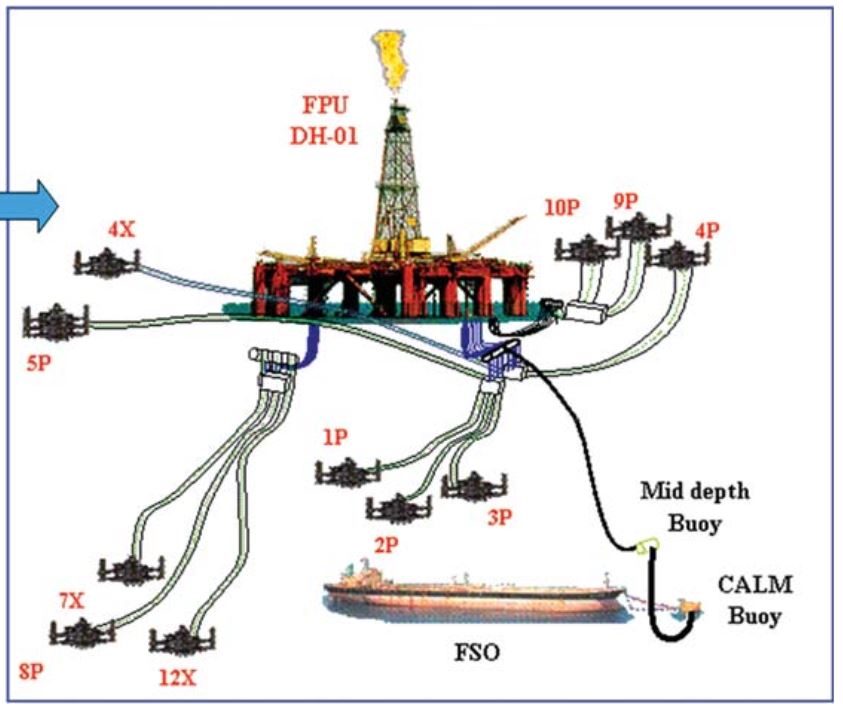
After a long production period, most subsea wells in the northern area of Dai Hung field (DH-01) have been heavily damaged along with fast reduction in flow rate, low wellhead pressure and discontinuous production. To improve production and recovery, the Petrovietnam Exploration Production Corporation (PVEP)/Petrovietnam Domestic Exploration Production Operating Company Limited (PVEP POC) has carried out a series of studies to evaluate the level of formation damage and made proposal for acid treatment. However, pumping acid into producing wells is a high-risk operation and in some cases could lead to loss of wells. Additionally, the implementation of acid treatment in subsea wells is highly challenging and there has been no precedent in Vietnam. This paper reviews the efficiency of innovative improvement in acidising practices for subsea wells in Dai Hung field. The acid pumping helped treat the near-wellbore damaged zone effectively, bringing 6/8 subsea wells back to stable production with flow rate increment of 12 - 40%, and in some special cases achieving oil rate from 4 - 11 times higher (DH-12X, DH-4X, and DH-5P). The improvement in acid treatment with high success rate (about 75%) has helped maintain and enhance production efficiency, provided premises and valuable lessons for future acid operations in Dai Hung as well as other fields.
References
2. Pill Rae, GinoDi Lullo. Matrix acid stimulation – A review of the State of the Art. SPE European Formation Damage Conference, The Hague, Netherlands. 13 - 14 May 2003.
3. H.Perthuis, R.Thomas. Fluid selection guide for matrix treatment. Tulsa, Oklahoma, USA, Dowell Schlumberger. 1991.
4. Curtis Crowe, JacquesMasmonteil, EricTouboul, RonThomas. Trend in matrix acidizing. Oilfeld Review. 1992.
5. C.F.Smith, A.R.Hendrickson. Hydrofluoric acid stimulation of sandstone reservoirs. Journal of Petroleum Technology. 1965; 17(2): p. 215 - 222.
6. B.B.Williams. Hydroflouric acid reaction with sandstone formation. Journal of Engineering for Industry. 1975.
7. R.D.Gdanski. Fluosilicate solubilities affect HF acid compositions. SPE Production and Facilities. 1994; 9(4): p. 225 - 229.
8. Rick Gdanski. Modeling acid returns profles after HF acidizing treatment. SPE International Symposium on Oilfeld Chemistry, Houston, Texas. 13 - 16 February, 2001.
1. The Author assigns all copyright in and to the article (the Work) to the Petrovietnam Journal, including the right to publish, republish, transmit, sell and distribute the Work in whole or in part in electronic and print editions of the Journal, in all media of expression now known or later developed.
2. By this assignment of copyright to the Petrovietnam Journal, reproduction, posting, transmission, distribution or other use of the Work in whole or in part in any medium by the Author requires a full citation to the Journal, suitable in form and content as follows: title of article, authors’ names, journal title, volume, issue, year, copyright owner as specified in the Journal, DOI number. Links to the final article published on the website of the Journal are encouraged.